Diode sources for wire-based laser metal deposition and laser-assisted WAAM
Directed energy deposition (DED) builds metal parts layer by layer by melting a filler material as it is deposited. When the filler is a wire, the process reaches high deposition rates, uses almost all the material and can produce or repair large parts. The laser plays two roles: as the main energy source in wire-based laser deposition, or as an auxiliary source that improves arc deposition (WAAM).
Coaxial wire laser deposition
In wire-based laser deposition, the wire is fed along the axis of the head and several beams converge on it. This coaxial configuration makes the process independent of travel direction: with three beams, the bead geometry is symmetric in any direction [1]. Compared with powder, wire is cheaper per kilogram and a larger fraction of it is used [2].
Parameter
Reference value (three beams, Ti-6Al-4V)
Total laser power (CW)
1,4–2,0 kW [1]
Wire diameter
1,2 mm [1]
Wire feed speed
38–54 mm/s [1]
Dependence on travel direction
Not significant [1]
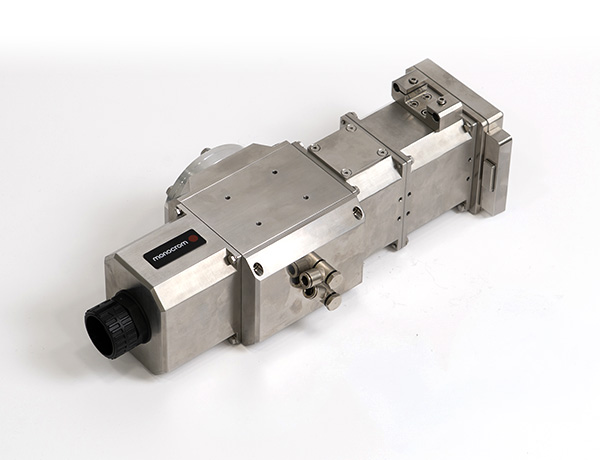
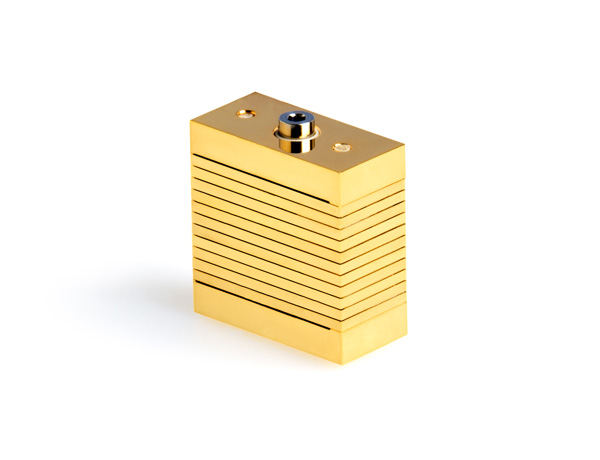
Multi-beam heads need compact, powerful sources with a well-shaped beam on the wire. We supply diode stacks with micro-optics for wire laser deposition heads.
DED
Coaxial wire
Multi-beam
Micro-optics
Titanium
Steel
Laser-assisted WAAM
Wire arc additive manufacturing (WAAM) offers very high deposition rates, but its accuracy and surface finish are limited. Adding a laser beam to the arc (L-WAAM) stabilizes the melt pool, reduces spatter and improves bead accuracy, resulting in higher quality, better surface finish and higher productivity [3, 4].
In the COMSENSO project, funded by CDTI, we developed the high-power laser source for an L-WAAM cell that integrates the beam with a GMAW torch and closed-loop process control [4]. The project results add to those published in the literature:
Result
Value
Source
Surface roughness
20% better than WAAM (laser–GMAW)
[3]
Elongation
+34%, with reduced anisotropy (laser–GMAW)
[3]
Yield strength
+15 % (láser–GMAW)
[3]
Starting material
−67% in a multi-material steel and Invar mold, compared with the conventional process
[4]
Part weight
−34% in the same mold, thanks to design freedom
[4]
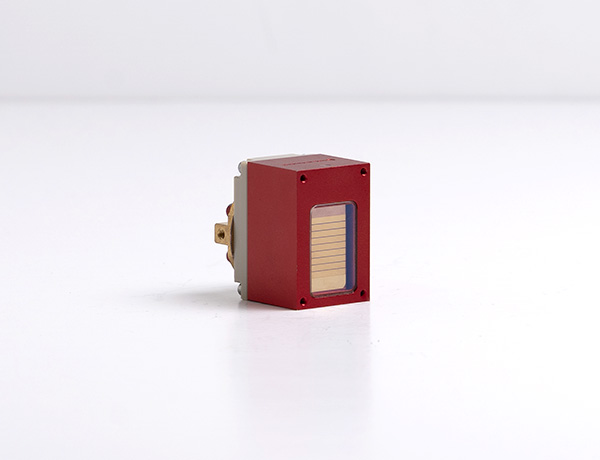
We supply the direct diode source with its power and control electronics, including closed-loop temperature control with a pyrometer, ready for integration into hybrid laser–arc heads.
WAAM
L-WAAM
Hybrid laser–arc process
Direct diode
Part quality
References 1. Mathenia R, McLain B, Sparks T, Liou F. A study of directionality effects in three-beam coaxial titanium wire-based laser metal deposition. Materials. 2024;17(13):3201. doi:10.3390/ma17133201 2. Ream S, Hay J, Walters C. High-power coaxial wire laser directed-energy deposition: an update. Industrial Laser Solutions (Laser Focus World), 23 de junio de 2021. 3. Kapil SK, Rajput AS, Sarma R. Hybridization in wire arc additive manufacturing. Front Mech Eng. 2022;8:981846. doi:10.3389/fmech.2022.9818 4. Proyecto COMSENSO. “El proyecto COMSENSO cierra su tercera anualidad con éxito”. Nota de prensa, 30 de septiembre de 2024. www.comsenso.es
Developing an additive manufacturing system?
Tell us about the process, the material and the deposition rate you are aiming for, and we will work with you to define the most suitable source. We develop custom solutions for equipment manufacturers and integrators.