Homogeneous-area direct diode sources for industrial drying and curing
Many industrial drying and curing processes take place in convection ovens: hot air transfers heat to the part from the outside, which means heating large volumes of air and structure, lengthens process times and requires very long lines. Diode laser radiation, by contrast, is absorbed directly in the coating or the part, and the energy goes only where it is needed. The process speeds up, the line becomes shorter and energy consumption falls. This requires homogeneous irradiance across the full width of the web or part.
Battery electrode drying
In lithium-ion cell manufacturing, the electrode slurry is coated onto a metal foil and dried in very long convection ovens, one of the most energy-intensive steps in production. Diode laser drying can reduce the energy required by up to 50% and the space occupied by the system by at least 60% [1]. In a hybrid roll-to-roll process combining hot air and laser modules, drying time has been cut by more than 60% and oven length halved, with 20–30% lower operating costs, at 30 m/min and with a beam more than 0.5 m wide, on graphite and silicon-graphite anodes and LFP cathodes [2].
In our laboratory we have dried water-based graphite anodes:
Parameter
Result (Monocrom, laboratory)
Wavelength
940 nm
Irradiance (CW)
2 W/cm²
Drying time
40 s
Slurry
Graphite with 55 wt% distilled water
Layer thickness
190 µm wet → 86 µm dry
Solvent evaporated
~82 %
Batteries
Electrode drying
Graphite anode
Roll-to-roll
Energy savings
Coating curing
Near-infrared laser sources (800–1000 nm) can replace ovens for curing thermosetting coatings, with significantly shorter curing times than traditional heat sources [3]. Energy is deposited in the coating itself, without having to heat the whole part or the surrounding air.
Curing
Coatings
Paints
Thermosets
Near infrared
Our sources
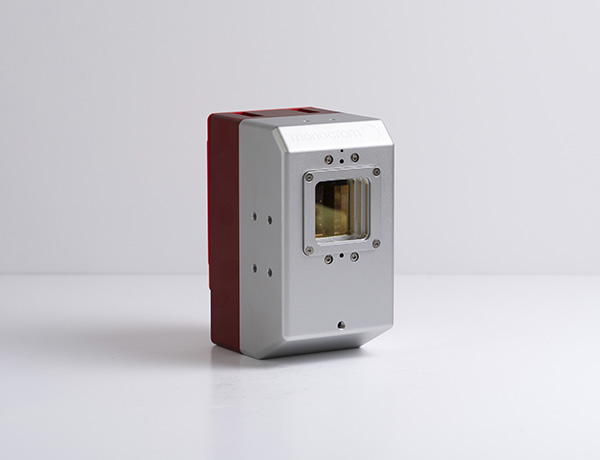
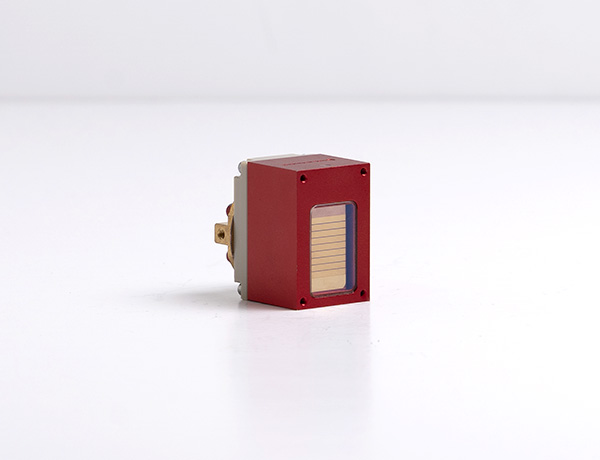
We design and manufacture direct diode sources of 2.4 kW per module that generate square areas or lines of perfectly homogeneous irradiance, from 5 to 250 W/cm², sized and at the working distance the process requires, even beyond one meter. Patterns from several modules are combined to cover the full width of the web or part. We supply them with their power and control electronics, ready for integration into drying and curing lines.
References 1. Fraunhofer ILT. Laser technology for energy-efficient production of battery cells coupled with improved performance. Nota de prensa, abril de 2023. 2. Fraunhofer ILT. Laser drying technology takes leap forward. Nota de prensa, 19 de marzo de 2025. 3. Schmitz C, Strehmel B. NIR LEDs and NIR lasers as feasible alternatives to replace oven processes for treatment of thermal-responsive coatings. J Coat Technol Res. 2019;16:1527–1541. doi:10.1007/s11998-019-00197-3
Want to speed up or electrify a drying or curing process?
Tell us about the material, the layer thickness, and the width and speed of the line, and we will work with you to define the most suitable configuration. We develop custom solutions for equipment manufacturers and integrators.