Continuous-wave diode sources for remelting polishing
Laser polishing smooths a metal surface by melting a very thin layer: surface tension redistributes the molten material from peaks to valleys and, on solidification, roughness is reduced without removing material, without abrasives or chemicals and without contact with the part. It is particularly useful for additively manufactured parts, whose surface roughness of tens of microns is one of the main limitations of these technologies [1, 2].
Continuous-wave macro polishing
In macro polishing, a 100–300 W continuous-wave laser remelts a layer 10–80 µm deep. Starting from roughness values of 2–16 µm Ra, values down to 0.1 µm Ra are reached, with process times of 10–200 s/cm² [1]. For finer finishes, micro polishing with pulsed lasers is used, remelting only 0.5–5 µm [1].
Parameter
Macro polishing (CW)
Micro polishing (pulsed)
Power
100–300 W
Lower, depending on the pulse
Remelting depth
10–80 µm
0,5–5 µm
Initial roughness
2–16 µm Ra
Already machined surfaces
Final roughness
Down to ~0.1 µm Ra
Tens of nm
Process time
10–200 s/cm²
Of the order of seconds per cm²
Remelting polishing
Continuous-wave laser
Roughness
Abrasive-free
Contactless
Polishing of additively manufactured parts
Laser polishing has been applied to additively manufactured parts in aluminum, titanium, cobalt-chromium and nickel alloys and in steels [2]. On Ti6Al4V produced by powder bed fusion, a continuous-wave laser reduced roughness from ~11 µm to ~1.8 µm (−73% to −83%) [3]. With a continuous-wave line beam on cobalt-chromium, roughness fell from 15 µm to 2.7 µm in the best case (−82%), with an average reduction of 57% [4]. Excessive energy density increases waviness and form error, so power and speed must be tuned to each material [4].
In tests carried out with the Laser Centre of the Universidad Politécnica de Madrid (UPM), we have remelted the surface of additively manufactured Ti6Al4V parts with a 940 nm fiber-coupled diode module, homogenizing the surface and reducing the peak-to-valley height of the treated area [5].
Additive Manufacturing
Ti6Al4V
Cobalt-chromium
Post-processing
Our sources
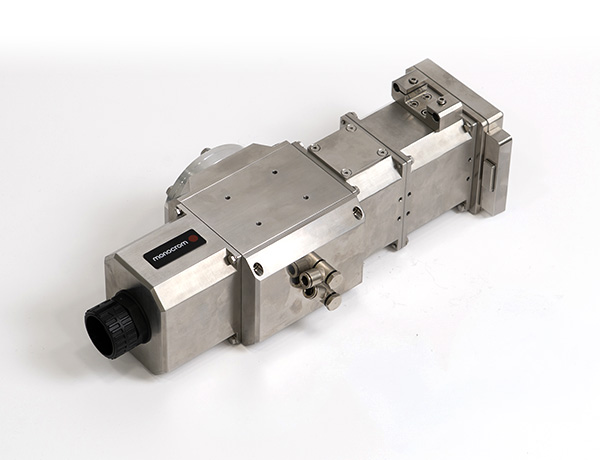
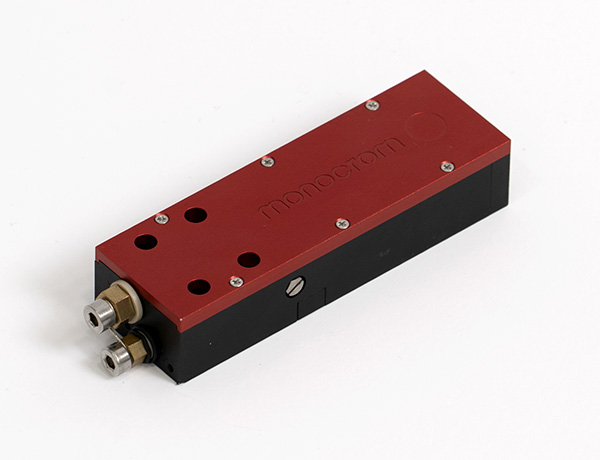
We design and manufacture continuous-wave fiber-coupled diode bars, with powers of up to hundreds of watts, for integration into polishing heads. Our compact, high-irradiance spot sources with integrated pyrometer cover the irradiance window of macro polishing and, thanks to the size of the melt pool, can also act on the waviness characteristic of additively manufactured parts.
References 1. Krishnan A, Fang F. Review on mechanism and process of surface polishing using lasers. Front Mech Eng. 2019;14(3):299–319. doi:10.1007/s11465-019-0535-0 2. Manco E, Cozzolino E, Astarita A. Laser polishing of additively manufactured metal parts: a review. Surf Eng. 2022;38(3):217–233. doi:10.1080/02670844.2022.2072080 3. Zeng J, Zhang W, Guo T, et al. Numerical and experimental analysis of dual-beam laser polishing additive manufacturing Ti6Al4V. Micromachines. 2023;14(9):1765. doi:10.3390/mi14091765 4. Kumar A, Kumar CS, Nath AK. Laser polishing of additive manufactured cobalt chrome alloy by continuous wave line-focused beam: a response surface methodology-based approach for improving surface finish. En: Advances in Additive Manufacturing, Vol. II. Springer; 2025:217–227. doi:10.1007/978-981-96-1509-4_19 5. Centro Láser UPM. Pruebas para la validación de sistemas láser desarrollados por Monocrom. Procesos láser industriales. Informe técnico, junio de 2024.
Want to improve the finish of your parts?
Tell us about the material, the manufacturing process, the initial roughness and the roughness you need, and we will work with you to define the most suitable configuration. We develop custom solutions for equipment manufacturers and integrators.