Diode and DPSS sources for fractional rejuvenation, collagen stimulation and laser toning
Skin rejuvenation covers treatments with different mechanisms of action, and each one calls for a different source. Monocrom offers sources for the three main ones: non-ablative fractional rejuvenation, dermal heating for collagen stimulation, and laser toning.
Non-ablative fractional rejuvenation
Fractional treatment splits the beam into microbeams that create microscopic columns of thermal coagulation (microthermal treatment zones, MTZs) up to ~200 µm in diameter [1], surrounded by intact tissue. The surrounding healthy tissue speeds up healing and stimulates collagen remodeling, without removing the epidermis. Each session treats only a fraction of the skin surface, typically 2–5% with low-power diode devices [2].
The chromophore is water, and wavelength and energy per microbeam set the column depth. The higher the water absorption, the shallower the effect; the higher the energy, the deeper and wider the MTZ [1].
Wavelength
Water absorption
Energy per microbeam
MTZ depth
Typical use
1550 nm
Moderate
5–40 mJ [1]
Up to >1 mm [1]
Wrinkles, acne scars, dermal remodeling
1440 / 1470 nm
High
A few mJ
~300–400 µm [2]
Texture, fine lines, pores
1927 nm
Very high
~5 mJ [2]
~150–200 µm [2]
Photoaging, superficial pigmentation
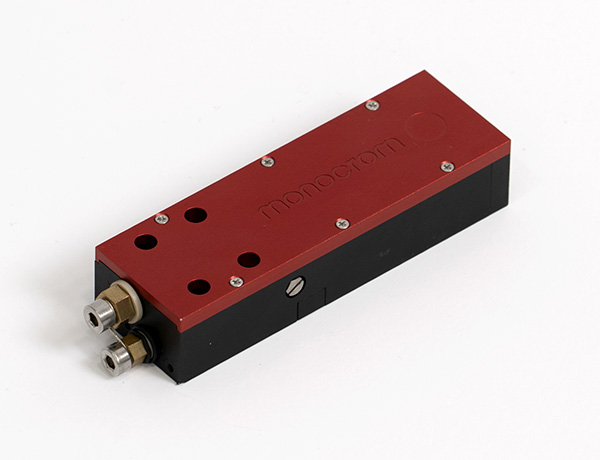
Fractional diode devices operate at 1 to 2.5 W [2], within reach of a single fiber-coupled emitter. For architectures with more simultaneous microbeams or faster treatment, we also offer higher-power sources:
Fiber-coupled single emitters, around 2 W, including ball-lensed fiber output.
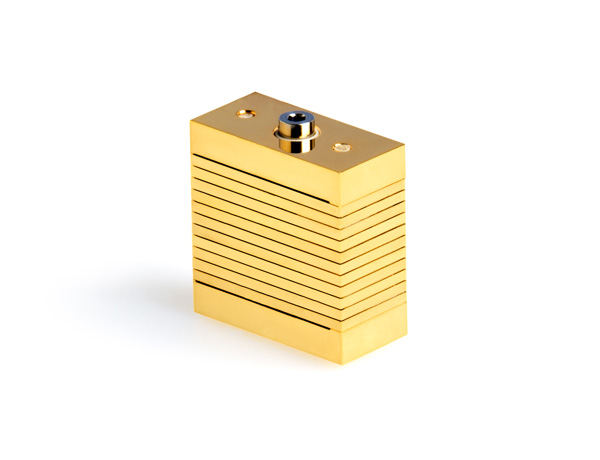
Fiber-coupled bars, up to 15 W, for scanner-based devices.
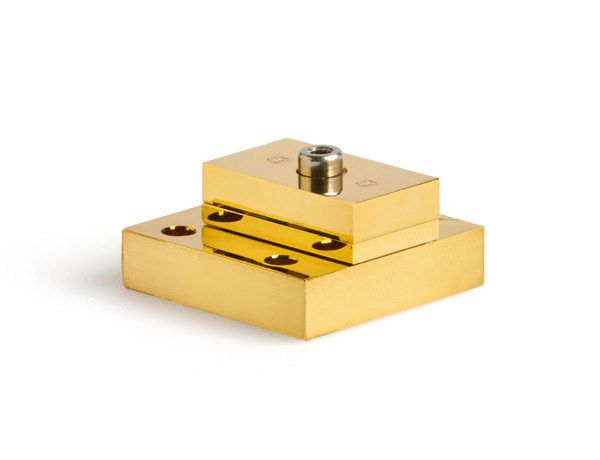
Collimated free-space bars and stacks, up to 25 W per bar.
1440 nm
1470 nm
1550 nm
1927 nm
Non-ablative fractional
MTZ
Fiber
Dermal heating and collagen stimulation
At 1064 nm, absorption by water and melanin is low and the radiation penetrates deep into the dermis. Controlled, uniform heating, without coagulation columns, causes collagen fibers to contract and stimulates new collagen and elastin synthesis [3]. The treatment is non-invasive and requires little or no downtime.
Clinical protocols combine large spots, moderate fluences and millisecond pulses:
Parameter
Reference value [3]
Fluence
20–24 J/cm²
Pulse duration
12 ms
Spot diameter
12 mm
Repetition rate
2 Hz
Protocol
3 passes per session, 3 monthly sessions
At these values each pulse carries around 25 J in about 12 ms, a peak power of roughly 2 kW. This is reached with a stack of several QCW diode bars. At 1064 nm our bars deliver much higher power than at other wavelengths: up to 250 W CW and 300 W QCW per bar.
1064 nm
Long pulse
QCW
Collagen stimulation
Laser toning
Laser toning uses low-fluence nanosecond pulses, applied in several passes over the whole treatment area until mild erythema [4]. The pulses fragment melanin granules without destroying melanocytes, evening out skin tone and improving melasma and diffuse pigmentation [4, 5].
Parameter
Reference value
Fluence
0,9–1,6 J/cm² [4, 5]
Pulse duration
Nanoseconds (Q-switched)
Spot diameter
6–10 mm [4, 5]
Repetition rate
2–10 Hz [4, 5]
Protocol
Several passes per session, sessions every 2 weeks [4, 5]
Fluence is low, but the large spots mean that conventional devices deliver 0.5–1 J per pulse. A high repetition rate source combined with a scanner reaches the same fluences with smaller spots and covers the same area in less time.
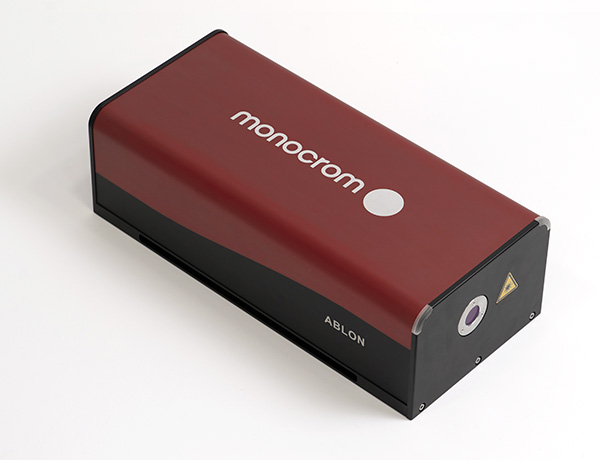
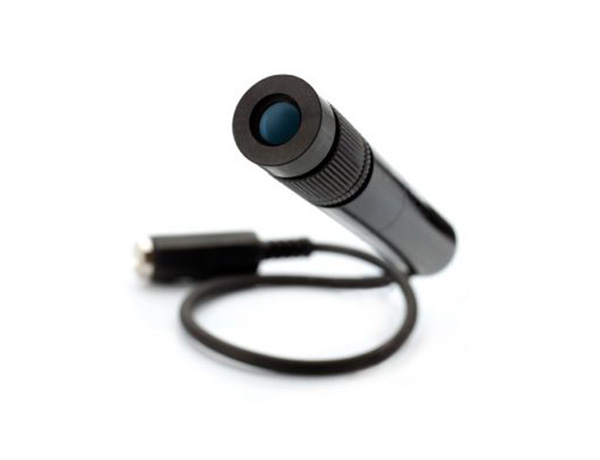
For this application we offer our Q-switched DPSS laser Ablon at 1064 nm. Being diode-pumped, it has no flashlamp to replace and offers excellent pulse-to-pulse stability.
1064 nm
Q-switched
Nanosecond
Melasma
Skin tone
References 1. Bedi VP, Chan KF, Sink RK, et al. The effects of pulse energy variations on the dimensions of microscopic thermal treatment zones in nonablative fractional resurfacing. Lasers Surg Med. 2007;39(2):145–155. doi:10.1002/lsm.20406 2. Friedman PM, Polder KD, Sodha P, Geronemus RG. The 1440 nm and 1927 nm nonablative fractional diode laser: current trends and future directions. J Drugs Dermatol. 2020;19(8 Suppl 1):s3–s11. 3. Hong JS, Park SY, Seo KK, et al. Long pulsed 1064 nm Nd:YAG laser treatment for wrinkle reduction and skin laxity: evaluation of new parameters. Int J Dermatol. 2015;54(9):e345–e350. doi:10.1111/ijd.12626 4. Aurangabadkar SJ. Optimizing Q-switched lasers for melasma and acquired dermal melanoses. Indian J Dermatol Venereol Leprol. 2019;85(1):10–17. doi:10.4103/ijdvl.IJDVL_1086_16 5. Munavalli GS, Leight-Dunn HM. Pilot study to demonstrate improvement in skin tone and texture by treatment with a 1064 nm Q-switched neodymium-doped yttrium aluminum garnet laser. J Clin Med. 2024;13(5):1380. doi:10.3390/jcm13051380
Developing a rejuvenation device?
Tell us about the treatment, wavelength, power and beam delivery you need, and we will propose the most suitable source. We develop custom solutions for equipment manufacturers (OEMs).