Green DPSS lasers for retinal photocoagulation and selective retina therapy
In ophthalmology, green radiation is absorbed by melanin in the retinal pigment epithelium (RPE) and by hemoglobin, and is transmitted through the transparent media of the eye. This makes it the reference wavelength for treating the retina. Depending on pulse duration, the effect ranges from thermal coagulation of the tissue to selective treatment of the RPE without damaging the neural retina.
Retinal photocoagulation (532 nm)
Green laser photocoagulation is an established treatment for proliferative diabetic retinopathy, macular edema and other retinal vascular diseases. In panretinal photocoagulation, hundreds or thousands of burns are applied to the peripheral retina. Multi-spot pattern systems with short pulses of about 20 ms achieve the therapeutic effect with lower fluence and with less pain and photophobia than conventional 100 ms single-spot burns [1], and allow treatment to be completed in a single session [2].
Parameter
Conventional (single spot)
Multi-spot pattern
Pulse duration
100 ms [1]
20 ms [1, 2]
Mean fluence
11,3 J/cm² [1]
4,8 J/cm² [1]
Sessions
Several [2]
One, with ~1,500 burns [2]
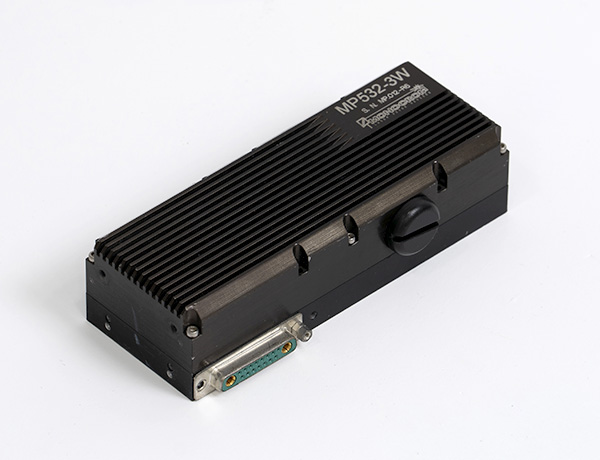
Although fluence is lower, the pulse is five times shorter, so short-pulse treatments require roughly twice the irradiance at the spot. Our 532 nm DPSS lasers, delivering several watts CW with electrical pulse modulation from hundreds of microseconds to hundreds of milliseconds, cover both conventional and pattern protocols.
532 nm
Photocoagulation
Panretinal photocoagulation
Diabetic retinopathy
Macular edema
Selective retina therapy (SRT)
Selective retina therapy uses trains of microsecond pulses at 527 nm. The energy is absorbed by the melanosomes of the RPE and heating remains confined to these cells, which are selectively destroyed without affecting the photoreceptors or the neural retina. The RPE then regenerates from adjacent cells [3]. Compared with conventional photocoagulation, SRT causes a much weaker inflammatory response in the retina [4].
Parameter
Reference value (527 nm)
Pulse duration
1,7 µs [3]
Number of pulses
30 per spot [3]
Repetition rate
100 Hz [3]
Spot diameter
200 µm [3]
At Monocrom we have developed a 527 nm source with microsecond pulses for this technique.
527 nm
SRT
RPE
Microsecond pulses
References 1. Muqit MM, Marcellino GR, Gray JC, McLauchlan R, Henson DB, Young LB, et al. Pain responses of Pascal 20 ms multi-spot and 100 ms single-spot panretinal photocoagulation: Manchester Pascal Study, MAPASS report 2. Br J Ophthalmol. 2010;94(11):1493–1498. doi:10.1136/bjo.2009.176677 2. Muqit MM, Marcellino GR, Henson DB, Fenerty CH, Stanga PE, et al. Randomized clinical trial to evaluate the effects of Pascal panretinal photocoagulation on macular nerve fiber layer: Manchester Pascal Study report 3. Retina. 2011;31(8):1699–1707. doi:10.1097/IAE.0b013e318207d188 3. Framme C, Walter A, Prahs P, Theisen-Kunde D, Brinkmann R. Comparison of threshold irradiances and online dosimetry for selective retina treatment (SRT) in patients treated with 200 nanoseconds and 1.7 microseconds laser pulses. Lasers Surg Med. 2008;40(9):616–624. doi:10.1002/lsm.20685 4. Han JW, Choi J, Kim YS, Kim J, Brinkmann R, Lyu J, et al. Comparison of the neuroinflammatory responses to selective retina therapy and continuous-wave laser photocoagulation in mouse eyes. Graefes Arch Clin Exp Ophthalmol. 2018;256(2):341–353. doi:10.1007/s00417-017-3883-7
Developing an ophthalmic device?
Tell us about the application, wavelength and treatment parameters you need, and we will work with you to define the most suitable source. We develop custom solutions for equipment manufacturers (OEMs).