Q-switched DPSS laser at 1064 nm and 532 nm for the treatment of benign pigmented lesions
Benign pigmented lesions are treated with nanosecond Q-switched lasers, regarded as the reference treatment at 532 nm and 1064 nm [1]. The pulses, shorter than the thermal relaxation time of melanosomes, fragment the pigment without damaging the surrounding tissue, and the body clears it over the following weeks. Wavelength is chosen according to pigment depth: 532 nm for epidermal lesions and 1064 nm for dermal lesions [1].
Epidermal lesions (532 nm)
Solar lentigines, ephelides and labial lentigines have their pigment in the epidermis. At 532 nm melanin absorbs strongly and the radiation acts superficially, requiring few sessions.
Parameter
Reference value (532 nm)
Fluence
1,8–2,2 J/cm² [2]
Pulse duration (Q-switched)
5–20 ns [2]
Spot diameter
3 mm [2]
Sessions
2–6 (mean 3.6) [2]
Outcome
>75% clearance in 73% of patients (labial lentigines) [2] · 66% reduction in pigmentation index (ephelides) [3]
The main adverse effect is post-inflammatory hyperpigmentation, more frequent in darker skin types [3, 4].
532 nm
Q-switched
Lentigines
Ephelides
Dermal and mixed lesions (1064 nm)
In nevus of Ota, Hori’s nevus and café-au-lait macules the pigment lies deeper. At 1064 nm the radiation reaches the dermis and epidermal melanin absorbs less, reducing the risk in darker skin types. Current protocols use low fluence and many sessions to limit pigmentary changes.
Parameter
Reference value (1064 nm)
Fluence
2.0–5.0 J/cm² (mean 2.5 J/cm²) [5] · 2.2–2.6 J/cm² with a 6 mm spot, followed by 4–6 J/cm² with a 4 mm spot [6]
Spot diameter
4–6 mm [6, 7]
Sessions
10–15 [6] · mean 17 (range 6–32), every 2 weeks [5]
Outcome
Near-total improvement in 18 of 19 patients (nevus of Ota) [5] · ≥50% clearance in 74% of café-au-lait macules [8], with efficacy comparable to 532 nm [9]
Treatment is safe even in skin type VI with conservative parameters [7].
1064 nm
Q-switched
Nevus of Ota
Hori's nevus
Café-au-lait macules
Our source: Ablon
With the spot sizes reported in the literature, conventional devices deliver around 0.1–0.2 J per pulse at 532 nm and 0.5–0.75 J at 1064 nm. A high repetition rate source combined with a scanner reaches the same fluences with slightly smaller spots and covers the same area in less time.
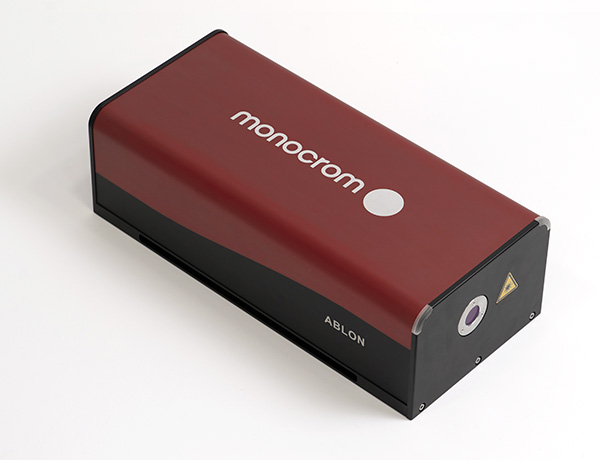
For these applications we offer our Q-switched DPSS laser Ablon, which emits at 1064 nm and accepts a second-harmonic module for operation at 532 nm. Being diode-pumped, it has no flashlamp to replace and offers excellent pulse-to-pulse stability.
References 1. Nisticò SP, Cannarozzo G, Provenzano E, Tamburi F, Fazia G, Sannino M, et al. Nanosecond Q-switched 1064/532 nm laser to treat hyperpigmentations: a double center retrospective study. Clin Pract. 2021;11(4):708–714. doi:10.3390/clinpract11040086 2. Ge Y, Jia G, Lin T. Q-switched Nd:YAG laser treatment for labial lentigines associated with Peutz-Jeghers syndrome. J Dtsch Dermatol Ges. 2015;13(6):551–555. doi:10.1111/ddg.12627 3. Sayed KS, Tuqan S, Hilal RF. Q-switched Nd:YAG (532 nm) laser versus intra-dermal tranexamic acid for treatment of facial ephelides: a split face, randomized, comparative trial. Lasers Surg Med. 2021;53(3):324–332. doi:10.1002/lsm.23291 4. Kang DH, Choi SM, Lee Y, Kim MS, Lew BL, Kwon SH. Postoperative risk assessment of post-inflammatory hyperpigmentation and the efficacy of delayed prevention following 532 nm Q-switched Nd:YAG laser treatment of solar lentigines: a randomized controlled study. J Dermatolog Treat. 2024;35(1):2398768. doi:10.1080/09546634.2024.2398768 5. Choi CW, Kim HJ, Lee HJ, Kim YH, Kim WS. Treatment of nevus of Ota using low fluence Q-switched Nd:YAG laser. Int J Dermatol. 2014;53(7):861–865. doi:10.1111/ijd.12085 6. Cho SB, Park SJ, Kim MJ, Bu TS. Treatment of acquired bilateral nevus of Ota-like macules (Hori’s nevus) using 1064-nm Q-switched Nd:YAG laser with low fluence. Int J Dermatol. 2009;48(12):1308–1312. doi:10.1111/j.1365-4632.2008.04061.x 7. Landau JM, Vergilis-Kalner I, Goldberg LH, Geronemus RG, Friedman PM. Treatment of nevus of Ota in Fitzpatrick skin type VI with the 1064-nm QS Nd:YAG laser. Lasers Surg Med. 2011;43(2):65–67. doi:10.1002/lsm.21011 8. Kim HR, Ha JM, Park MS, Lee Y, Seo YJ, Kim CD, et al. A low-fluence 1064-nm Q-switched neodymium-doped yttrium aluminium garnet laser for the treatment of café-au-lait macules. J Am Acad Dermatol. 2015;73(3):477–483. doi:10.1016/j.jaad.2015.06.002 9. Zhuang Y, Huang M, Shen J, Wang L, Yang L, Jiang A, et al. Comparison of the efficacy and safety between a low-fluence 1064-nm Q-switched Nd:YAG laser and a conventional Q-switched 532-nm laser for the treatment of cafe-au-lait macules in 40 Chinese children: a prospective, randomized, parallel-controlled, evaluator-blinded trial. Lasers Med Sci. 2022;37(1):279–286. doi:10.1007/s10103-021-03245-w
Developing a device for pigmented lesions?
Tell us about the application, wavelength and treatment parameters you need, and we will work with you to define the most suitable configuration. We develop custom solutions for equipment manufacturers (OEMs).